
The hours you're giving away
Darwin wrote 23 books working 4 hours a day. You're spending yours on email.

In 1842, Charles Darwin left London for a quiet house in the English countryside. He had a theory that would change how humans understood themselves, and he knew it would take years of concentrated thought to prove it. So he did something unusual. He designed his days like a miser designs a budget.
Darwin worked 3 sessions a day. 90 minutes each. The first began at 8 am, after a short walk and a solitary breakfast; this was his prime window, the hours he reserved for his hardest thinking. By 9:30, he stopped. Read letters. Listened to his wife read a novel aloud. At 10:30, he returned for a second session, often in his greenhouse running experiments. By noon, he’d declare, “I’ve done a good day’s work,” and walk for an hour on the gravel path behind his house.
The afternoon was spent napping, walking, playing backgammon, and spending time with family. 4 hours of real work. And over 17 years, on that schedule, he wrote On the Origin of Species and 18 other books. He didn’t just change biology. He changed how we understand what it means to be alive.
Most people would call that lazy. Darwin understood something they didn’t: not all hours carry the same weight.
There is a moment, every day, when you are the richest version of yourself.
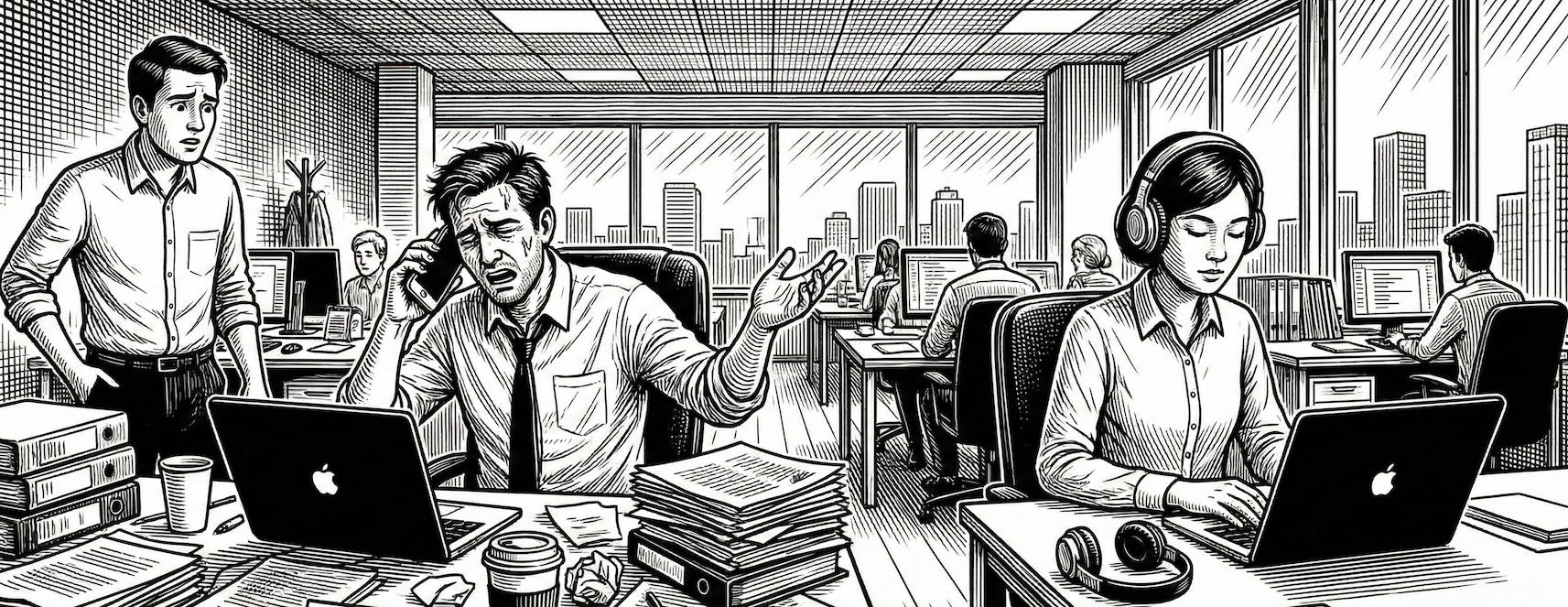
Your focus is sharpest. Your judgment is clearest. Your capacity to navigate complexity, to hold competing ideas, to make decisions that actually stick; all of it is at its peak. And then, hour by hour, you spend it. Every meeting, every email, every context switch draws from the same account. By the time the day winds down, most professionals are running on fumes and don’t know it.
We treat this like a discipline problem. I should be able to focus. I used to be sharper. Maybe I need more coffee, more sleep, a better system. But the issue isn’t discipline. It’s accounting.
Sleep researcher Dr Michael Breus identifies four chronotypes: biological profiles that determine when your cognitive energy peaks and dips. Lions wake early and peak before noon. Bears, roughly 55% of the population, follow the sun and hit their stride mid-morning. Wolves don’t come alive until late morning or evening. And Dolphins, the lightest sleepers, operate in unpredictable bursts. These aren’t personality quirks. They’re hardwired into your genetics; your circadian rhythm runs the schedule whether you’re aware of it or not.
The point isn’t that mornings are magic. The point is that your peak window exists, and most people fill it with their lowest-value work.
A landmark study published in the Proceedings of the National Academy of Sciences made this visible in the starkest possible terms. Researchers analysed over 1,100 parole decisions by experienced Israeli judges and found that prisoners heard early in the morning received favourable rulings roughly 65% of the time. By late afternoon, that number dropped to nearly zero. Same judges. Same types of crimes. Same sentencing guidelines. The only variable was when the hearing fell during the day. As the judges’ cognitive reserves depleted, they defaulted to the safest, lowest-energy option: deny.
This isn’t a courtroom problem. It’s a human one. James Clear put it simply: “In the long-run, prioritisation beats efficiency.” You can optimise your to-do list until it gleams. But if you’re spending your richest hours on email and status updates, no system will save you.
Context switching alone, moving between unrelated tasks, has been shown to consume up to 40% of productive capacity. That’s nearly half your budget, gone before you’ve touched the work that matters. And yet most calendars are built backwards. The difficult conversation at 4 pm. The strategic thinking crammed between back-to-back calls. The creative work pushed to “when things quiet down,” which is another way of saying never.
The problem isn’t that you don’t have enough energy. The problem is you’re spending it like someone who thinks the supply is infinite.
Here is what no one tells you about that afternoon collapse: it was never a discipline problem. The capital ran out.
Performance psychologist Tony Schwartz identified the sleight of hand most professionals perform on themselves every day. In The Power of Full Engagement, he and co-author Jim Loehr put it plainly: “Energy, not time, is the fundamental currency of high performance.” We blame the calendar. We blame the workload. We blame ourselves for not being tougher, sharper, more resilient. But the calendar isn’t the problem. The account is empty.
Think about your last difficult week. You probably started Monday with a clean budget, making thoughtful decisions, holding space for nuance, and giving people your full attention. By Thursday afternoon, you were snapping at small things, postponing decisions that should have taken 5 minutes, and reaching for your phone between every task. You hadn’t become a worse professional. You’d become a poorer one. The cognitive reserves that funded your patience, your creativity, your judgment; they were spent. And you kept writing cheques anyway.
Psychologists call this decision fatigue. But that term is too clinical for what it actually feels like. What it feels like is erosion. A slow blunting of the instrument you rely on most. You don’t notice the moment it happens; you only notice the consequences. The email you shouldn’t have sent. The shortcut you took on work that deserved more care. The conversation you phoned in because you had nothing left to bring.
You are not burned out. You are overdrawn.
The difference matters. Burnout suggests something is broken. Overdrawn suggests something needs restructuring. One is a diagnosis. The other is a budget problem. And budget problems have solutions.
Seneca made an observation 2000 years ago that still stings: most people don’t have a short life. They waste a long one. He watched Rome’s busiest men fill their days with obligations that consumed everything and produced nothing of lasting value. They mistook motion for progress.
The prescription begins with one question most professionals have never seriously asked: When am I actually good?
Not productive. Not busy. Good. Capable of the kind of thinking that justifies your role, your experience, your seat at the table. For most people, that window lasts 2 to 4 hours. And most people fill it with their lowest-value work.
Poet Annie Dillard wrote: “How we spend our days is, of course, how we spend our lives. A schedule defends from chaos and whim. It is a net for catching days.”
The net she’s describing isn’t a productivity system. It’s a boundary. Strategic work goes inside the window. Email, admin, routine meetings go outside it; not because those things don’t matter, but because they don’t require the sharpest version of you. And the version of you that’s sharpest doesn’t last all day.
I previously wrote about theming your days: batching similar work so your brain isn’t burning fuel on constant context switches. But theming only works if you protect the hours that matter most. So I started small. 90 minutes of deep work, first thing every morning, before the inbox opens, before Slack lights up, before anyone else’s priorities become mine. That’s it. 90 minutes. But 90 minutes, 5 days a week, add up to 8 hours of focused, uninterrupted thinking. 8 hours that didn’t exist before; not because I found more time, but because I stopped giving away the best of it.
Does it work perfectly every day? No. Sometimes a customer escalation lands at 7 am, and the block disappears. That’s the job. But where I can, I protect that time ruthlessly. And the difference between the weeks I hold the line and the weeks I don’t is stark. It’s the difference between moving things forward and just keeping things running.
There’s a reason those protected hours feel different. When you work within your peak window without interruption, you don’t just think better; you enter a state psychologists call flow. Mihaly Csikszentmihalyi spent decades studying it: that condition in which the task absorbs you completely, time bends, and the gap between thinking and doing disappears. James Clear distilled it to a single line: “Anxiety is thought without control. Flow is control without thought.”
Flow isn’t random. It has prerequisites, and the biggest one is unbroken attention during hours when your brain is already running hot. Try to reach it at 4 pm after 6 context switches and a difficult conversation, and it won’t come. But sit down at your peak with a single clear problem and no incoming noise, and it arrives faster than you’d expect. The authors of Ikigai observed that flow behaves like a muscle: the more consistently you train it, the more reliably it shows up. Protect the window, and flow stops being something that happens to you occasionally and becomes something you can access deliberately.
So where do you start? With the science you already have.
Go back to Dr Breus’s chronotypes. Figure out which one you are; there are free online assessments that take 5 minutes. You’re not looking for a personality label. You’re looking for your window. The hours when your cognition runs hottest and your decision-making is sharpest. For lions, that’s early morning. For wolves, it might be late morning or evening. The point isn’t when society says you should be productive. The point is when your biology says you actually are.
Once you know the window, audit your calendar against it. Open last week’s diary and look at what filled your peak hours. Meetings you didn’t need to attend? Admin you could’ve done at 3 pm? Someone else’s emergency that became your morning? Most people who do this exercise for the first time are genuinely shocked. The mismatch between their best hours and their best work is enormous.
Then restructure. Block your peak window for the work that actually requires your full capacity; the strategic thinking, the complex problem-solving, the decisions that carry weight. Move everything else outside it. You'll still be available. But you'll be available on terms that actually serve the work, not just the noise around it.
Start with one week. 90 minutes a day, protected. Track what changes, not just in output, but in how you feel at the end of the day. The difference between a day where your best energy went to your best work and a day where it was scattered across other people’s agendas isn’t subtle. You’ll feel it before you measure it.
The Stoics understood this intuitively. Marcus Aurelius began every morning with his journal; not because journaling was fashionable, but because the first hours of the day were when his thinking was clearest, and the empire’s demands hadn’t yet eroded it. He protected the window before it had a name.
The transformation is from reactive to intentional. From letting the calendar dictate your energy to designing the calendar around it. You don’t need a longer day. You need to stop spending the best part of the one you have on work that doesn’t deserve it.
Darwin didn’t work more hours than his peers. He worked fewer. But the hours he worked were his best ones; protected, deliberate, aligned with how his mind actually functioned. 4 hours a day. 23 books. A theory that rewrote our understanding of life on Earth.
He didn’t find more time. He spent what he had where it counted.
You are not a 19th-century naturalist with a private estate and no Slack notifications. But you do have the same finite budget of cognitive energy every morning, and the same choice about where it goes.
Seneca, from a rocky island at the edge of the known world, wrote: “It is not that we have a short time to live, but that we waste a great deal of it.”
2000 years later, the waste looks different. But the principle hasn’t moved.
You know when you’re sharpest. You know what deserves that window.
The only question left is whether you’ll protect it.